
Baked dog food: is it gentler for sensitive digestion?
Baked dog food: what does it mean and why is it gentler for sensitive digestion?
As dog owners, we are currently facing a particular paradox: the range of feeds is wider than ever before, but at the same time, there are more and more dogs with sensitive digestion, itching, or loss of appetite. Perhaps your dog is one of them.
You might then come to the conclusion that "maybe the problem isn't just WHAT your dog eats, but also HOW its food is actually made?"
It is in this context that so-called baked kibble is increasingly being discussed. What does this term really mean, how does it differ from regular kibble, and for which dogs can baked kibble make sense?
How regular kibble is made (extrusion)
Most dry pet food on the market is produced through a process called extrusion, which is the standard for pet food manufacturing. Simply put:
- ingredients are ground and mixed, (and in this article we are not concerned with the quality of the input ingredients...)
- the mixture is subjected to high heat and pressure,
- the mass is pressed through a mold into the shape of kibble,
- it is then dried and often coated with a fat spray for a more appealing taste...
Extrusion allows for the production of nutritionally complete and stable feed in large volumes, and it works well for many dogs (although as a breeder, I would definitely not keep my dog solely on extruded kibble).
At the same time, however, the latest research (and experience) shows that the intensity of thermal and mechanical processing, combined with the (un)quality of input ingredients, can significantly affect the structure of nutrients and their digestibility, especially in more sensitive individuals.
What is baked kibble
Baked kibble is produced using a different technological process. Instead of brief exposure to extreme pressure and temperature, the food is slowly baked at lower temperatures. The process typically involves:
- mixing ingredients,
- shaping the kibble,
- slower thermal processing in an oven.
It's not about a "better" or "worse" technology, it's about a different processing method that has its advantages and may suit some dogs better.
Is baked kibble more digestible?
The digestibility of food is determined not only by its composition and the raw ingredients used, but also by its structure and degree of processing.
1. Different kibble structure
Baked kibble tends to be more brittle and break down more easily. This can facilitate both mechanical and enzymatic digestion, especially in small breeds.[i]
2. Gentler thermal load
Lower temperatures can help preserve the natural properties of ingredients and limit the formation of certain by-products of intensive heat processing.[ii]
3. More natural taste of the food
Due to the different production method, the taste is more derived from the ingredients themselves, rather than just a surface fat coating. This can be especially beneficial for dogs:
- with sensitive digestion,
- after long-term diets,
- or for picky eaters.
For which dogs baked kibble can make the most sense
From practical experience and veterinary nutrition, it follows that a change in food technology can particularly help dogs who:
- have sensitive digestion,
- suffer from recurrent itching without a clear cause,
- tolerate frequent food changes poorly,
- or are chronically picky.
If you are dealing with itching, it might be useful to look at the broader context of nutrition: https://royalwoofs.cz/blogs/news/tipy-jak-ulevit-psovi-od-svedeni
For whom baked kibble may not be necessary
It's important to state the opposite side as well.
If your dog:
- has been thriving on their current food for a long time,
- has stable digestion,
- has no skin or digestive problems,
there's no reason to change the food solely due to the manufacturing technology.
Stability in a dog's diet is often more important than constantly searching for a "better" option, and you can "treat" your dog by adding fresh foods.
The recommendations are also based on FEDIAF nutritional principles.[iii]
How to recognize quality baked kibble
The "baked" label alone doesn't guarantee quality. Look primarily for:
- a clearly stated source of meat,
- a high proportion of fresh animal ingredients (meal is not ideal),
- transparent composition,
- minimum technological fillers,
- traceable origin of production.
Complete nutritional balance should comply with FEDIAF or AAFCO recommendations.
How to proceed when changing food
If you are considering a change due to digestion or itching, the safest procedure is usually:
1. choose one quality food,
2. transition gradually (10 - 21 days as needed),
3. do not change treats or other supplements at the same time,
4. monitor the dog's stool, skin, energy, and mood.
Too frequent changes are often the cause of long-term digestive instability.
How McAdams baked kibble fits into this
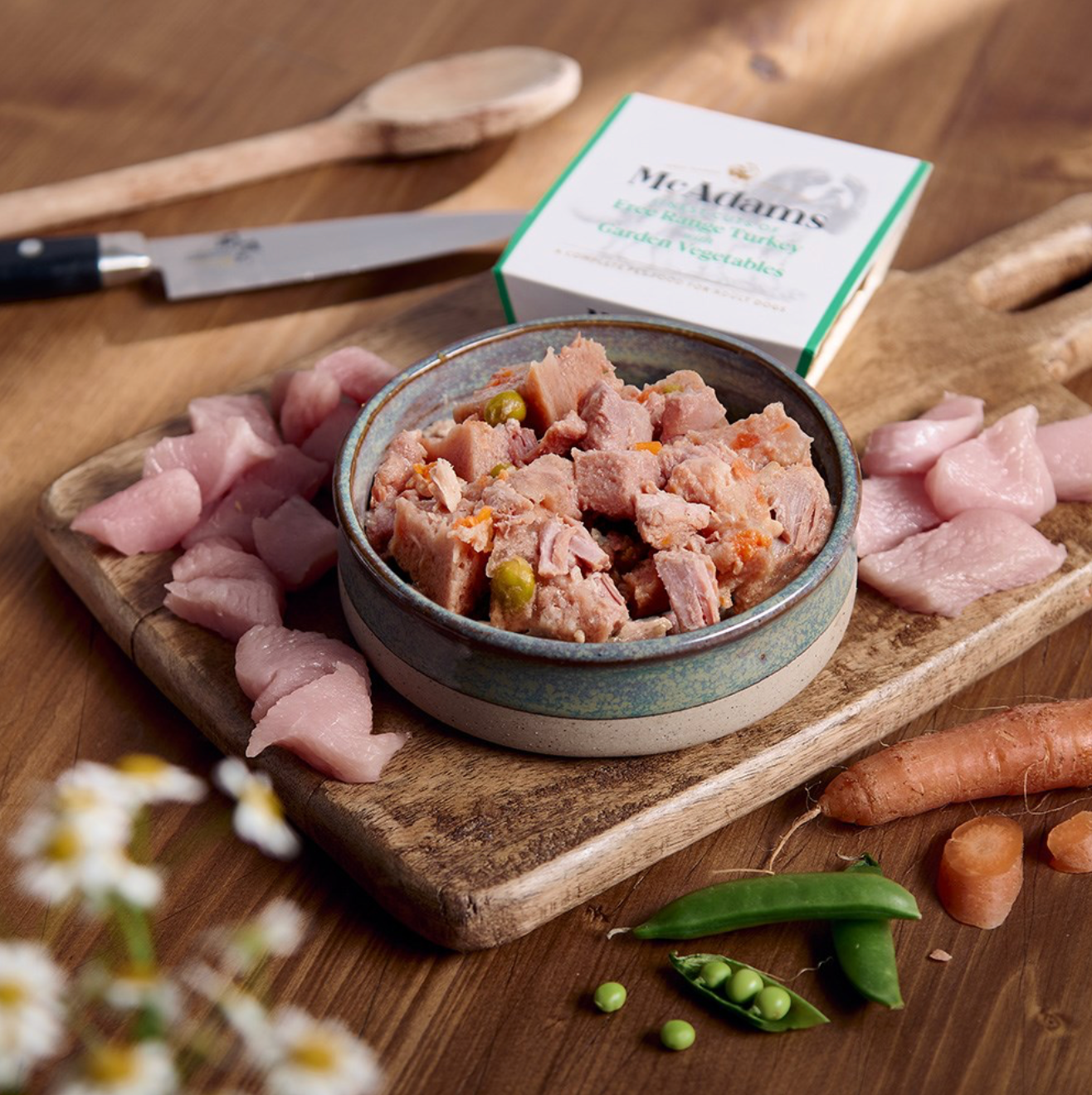
One example of baked food is McAdams kibble, which is made from whole lean cuts of free-range meat and processed by gentle baking.
They are not a universal solution for every dog, but especially for more sensitive individuals, they can be a path to simpler and more stable feeding and overall better condition for the dog.
Conclusion
Baked kibble is not a marketing trend or a universal miracle solution. However, it is a different and gentler technological approach to food processing that can help some dogs digest and absorb food better.
The goal is not to find "the best food in the world," but one on which your dog feels consistently good.
And sometimes the difference really lies in how and from what the food was made.